The Bedtime Bible Journal
Bible Stories About Courage for Kids Who Feel Small
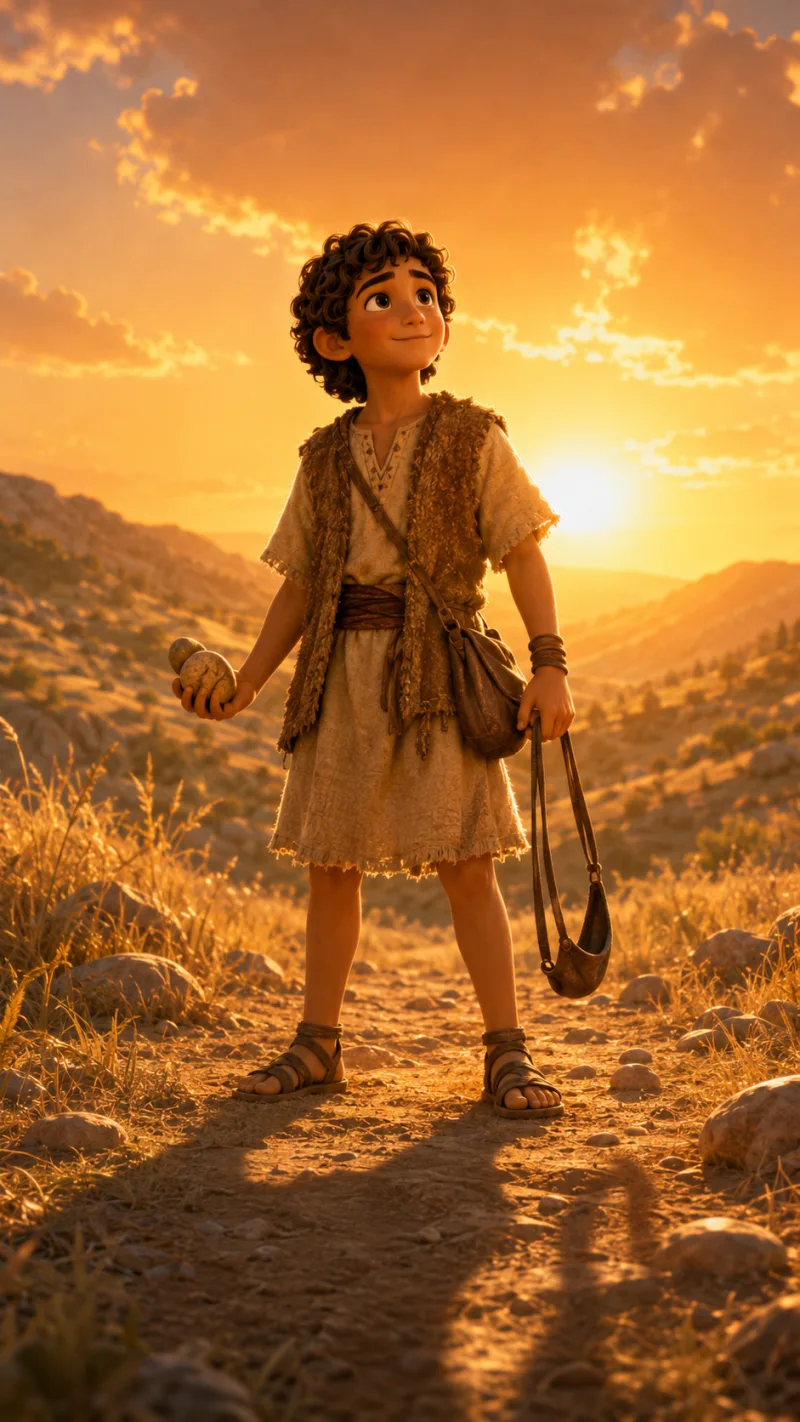
Your kid tells you at 8:40pm that they do not want to go tomorrow. The bus, the new class, the sleepover, the thing they said yes to last week and have regretted every day since. You reach for the shelf, because Bible stories about courage for kids is exactly the category you want right now, and you land on David and Goliath.
It is a good instinct. It also has a trapdoor in it, and it is worth knowing where the trapdoor is before you read the story out loud.
The problem with brave-kid stories
Told quickly, most of these stories say the same thing: the small person was brave, and then the small person won. A child hears the ending as the promise. Be brave and it works out.
Then your child is brave on Tuesday, and nobody sits with them at lunch anyway. Now the story has quietly taught them that their courage was defective, or that God’s part did not come through. That is a heavy thing to hand a seven year old at bedtime.
The fix is not to skip these stories. It is to read them slowly enough to notice that the Bible almost never defines courage as winning.
Three Bible stories about courage for kids, and what to say after
David and the giant. Before the famous part, Saul looks at him and says the thing every small person has heard: “You cannot go out against this Philistine to fight him. You are just a boy, and he has been a warrior from his youth.” (1 Samuel 17:33) David goes anyway, and what he says walking out is not a boast about his aim. “You come against me with sword and spear and javelin, but I come against you in the name of the LORD of Hosts, the God of the armies of Israel, whom you have defied.” (1 Samuel 17:45)
What to say after: notice with your child that David did not say he was strong. He said whose he was. Ask who is with them tomorrow on the bus.
Three friends and the furnace. Shadrach, Meshach, and Abednego are ordered to bow to King Nebuchadnezzar’s statue. Their answer is the most useful sentence in any of these stories, and it is worth reading twice: “If the God whom we serve exists, then He is able to deliver us from the blazing fiery furnace and from your hand, O king. But even if He does not, let it be known to you, O king, that we will not serve your gods or worship the golden statue you have set up.” (Daniel 3:17-18)
But even if He does not. Their courage was not conditional on the rescue arriving. That one clause is the antidote to everything wrong with brave-kid stories, and even young children catch it if you slow down on it.
Esther walks into the throne room. Her cousin Mordecai tells her that being queen will not exempt her from what is coming, and asks whether she reached that position for exactly this moment. Esther’s reply, after three days of fasting, is not confident. It is honest: “And if I perish, I perish!” (Esther 4:16)
What to say after: she was still scared while she walked. Being scared and going anyway is the whole thing. It is not a lesser version of courage that real brave people skip.
What the three of them have in common
None of them felt fearless. All three named out loud who God was before they moved, and then moved before they knew how it would end. That is a definition of courage a child can actually use on a Tuesday, because it does not require the outcome to cooperate.
Younger children, roughly two to six, will take this in as a picture: the boy went, the friends stood, the queen walked. Older kids, seven and up, can sit with “but even if He does not” and tell you what it means. Both are the real lesson. Neither needs a moral tacked on the end.
Tonight
Read one of the three, not all three. Then ask one question: what was the scary part for them? Let your child answer, and let the answer be short. You are not building a lesson. You are putting a picture in their head that will still be there tomorrow morning when the backpack is by the door.
Bedtime Bible Stories tells all three, each one written four separate times so a three year old and a ten year old get a version that fits, with three short questions at the end.