The Bedtime Bible Journal
How to Explain Communion to a Child
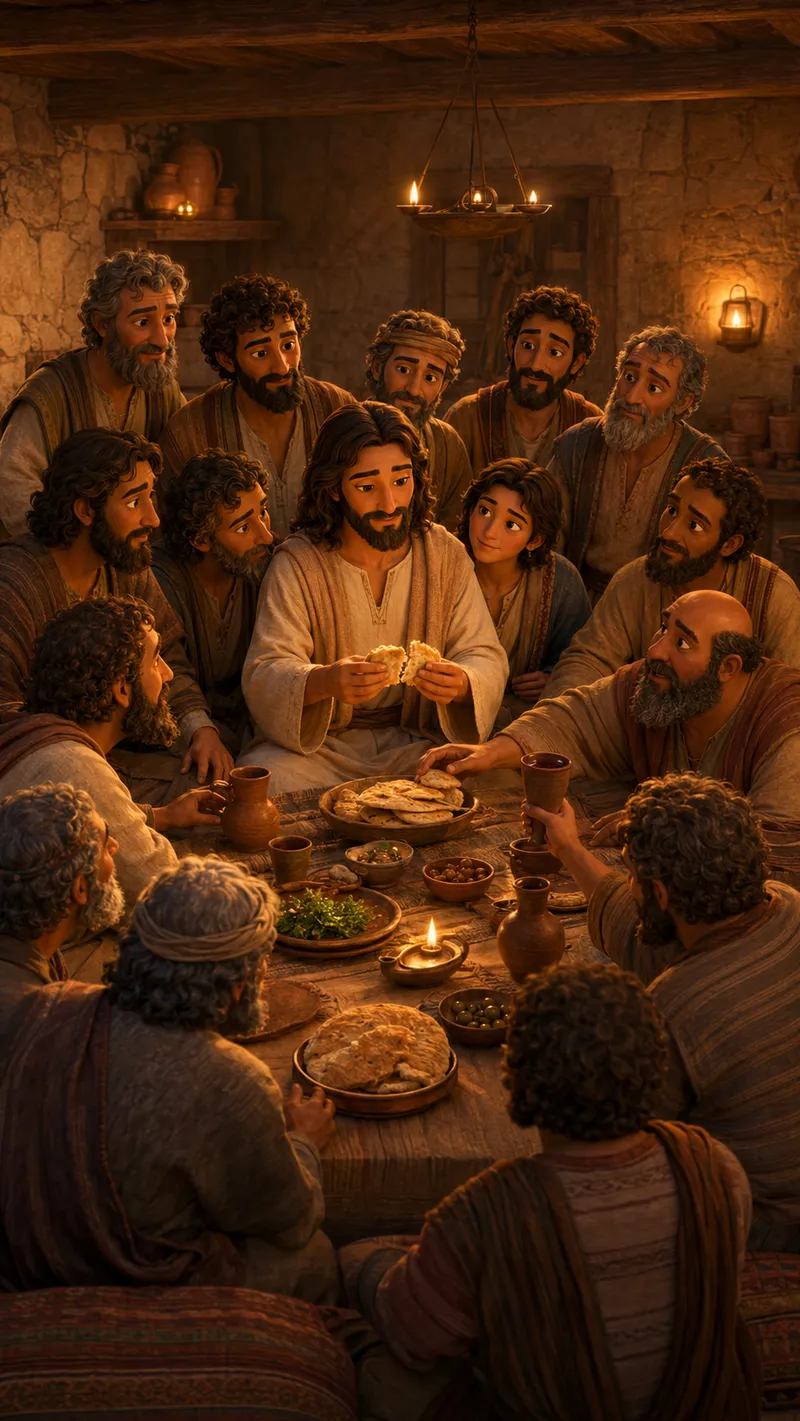
The trays start at the front and work their way back, row by row, and your seven year old tracks them the entire time. Then, at the exact moment the sanctuary goes quiet, she leans into your arm and asks, at full volume, “What is that? Can I have some?”
You have about eight seconds and four rows of people listening.
The two sentences for right now
Most parents go looking for how to explain communion to a child after the question has already been asked badly, in public, with an organ playing. So start with the pew answer, the one you say without thinking:
“That’s called communion. It’s how the church remembers Jesus. I’ll tell you the whole story in the car.”
That is enough. It is true, it is calm, and it buys you the drive home.
The harder half is “can I have some,” and the answer there depends on your church. Practices differ widely across Christian traditions, and Ministry to Children’s guidance for leaders is simply to check your own church’s policy rather than assume. Some are open to any child who wants to take part. Some ask kids to wait until they can say for themselves what they believe. If you are not sure which yours is, that is worth a two-minute conversation with your pastor, and it is a good question to ask, not an embarrassing one.
Whatever the answer, the framing that matters is not yet, never too little. “Our church asks kids to wait until they’re ready to say what it means, and I’ll help you get there” lands very differently than “you’re too young.”
The longer version, at home
It helps children enormously to know that communion started at an actual dinner. Not a ceremony. A meal, in a borrowed upstairs room, with friends who had walked dusty roads together for years and had no idea it was the last one.
Luke records what Jesus did with the bread: “And He took the bread, gave thanks and broke it, and gave it to them, saying, ‘This is My body, given for you; do this in remembrance of Me’” (Luke 22:19).
The word to teach is remember. Ministry to Children describes it as reenacting the day in our minds, thinking about it as though we had been in the room. That is a thing a child can actually do. Years later, Paul passed the same words along to a young church and added, “For as often as you eat this bread and drink this cup, you proclaim the Lord’s death until He comes” (1 Corinthians 11:26). The church has been doing one meal, on purpose, for a very long time.
What to say about the bread and the cup
Young children do not think in abstractions yet, and describing communion as the body and blood of Christ can genuinely frighten them, as one UMC.org guide for caregivers points out. Orchard Hill Church suggests telling younger kids plainly that the bread and the cup are symbols.
A comparison that works: the photo of Grandma on your refrigerator is not Grandma. It is how you keep her close and keep remembering her. The bread and the cup do that job, and they do more than that, which is the part Christians have discussed for centuries.
You can say that last part out loud. Churches differ on exactly what happens at the table, your church teaches its view, and you do not have to settle a very old question over spaghetti with a six year old.
Roughly what to say at each age
- 2 to 3: “That’s the church’s special bread. It helps us remember Jesus.”
- 4 to 6: Add the dinner. Jesus and his friends ate together, he broke the bread, and he asked them to keep doing it so they would remember him.
- 7 to 8: Add the timing. It was the night before he died, and he knew. That is when “remember me” starts to carry weight.
- 8 and up: Add the word covenant, which just means a promise God makes and keeps. They can also hold the fact that Christians disagree about the details, which is often a relief rather than a problem.
Leave room for the mystery
You are allowed to say “I don’t fully understand it either.” Orchard Hill’s guidance makes room for exactly that, noting Jesus did not explain further. A child who learns that faith has room for unanswered questions is better off than one who learns that every question has a tidy card-sized answer.
Before next Sunday
Pick your one sentence and say it out loud once in the kitchen this week, so it is ready before the trays are. If you do not know your church’s practice, text your children’s minister. That is the whole assignment.
The Last Supper is one of the 82 stories in Bedtime Bible Stories, written four separate times so a three year old and a ten year old each get a version that fits, with three discussion questions to take it further.