The Bedtime Bible Journal
How to Explain Hard Bible Stories to Kids Without Scaring Them
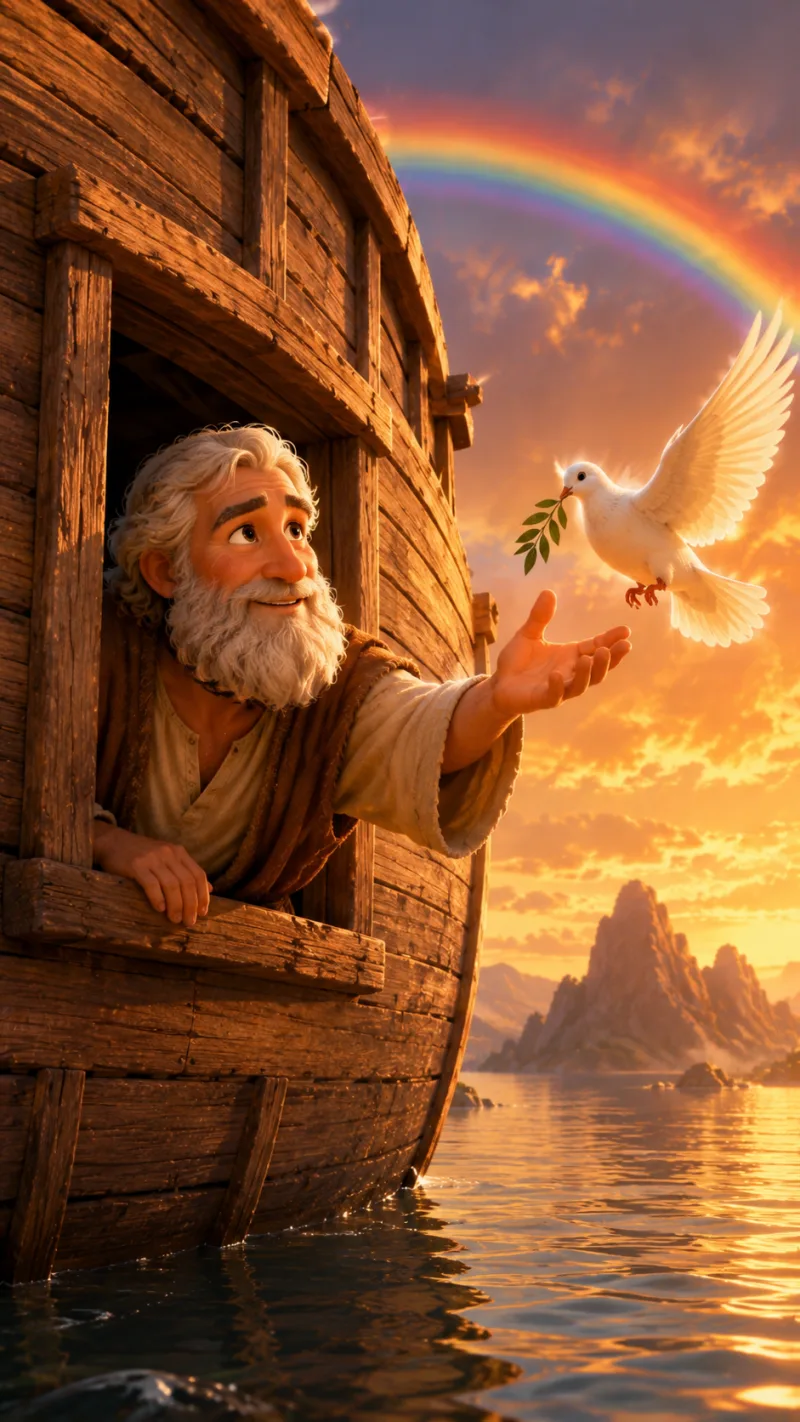
You’re three pages into Noah at bedtime. The animals are going in two by two, the ark looks cheerful, your child is finally settling. Then a small voice asks the one thing you were quietly hoping to get past: “What happened to all the other people?”
That’s where most of us stall. The version we grew up with came with a rainbow and a smiling giraffe, and we absorbed the idea that the rest was for grown-ups. So we say something vague and turn the page too fast. Learning how to explain hard Bible stories to kids is less about having a perfect answer ready and more about knowing how much to say tonight.
Why skipping the hard parts tends to backfire
A carefully harmless Bible is easy to outgrow. Anna Mussmann, writing in The Lutheran Witness, makes the case that a faith kept free of anything difficult becomes simple to set down later, when life turns out to be neither simple nor free of difficulty. Shelby Turner puts it plainly at iBelieve: “Don’t omit the troublesome parts of the Bible while your children are young.”
A child who meets the hard parts at eight, with you sitting on the edge of the bed, is in a much better spot than a teenager who runs into them alone and concludes the whole thing was oversold.
That is not an argument for reading everything to everyone. It’s an argument for not pretending.
Decide what the story is about before you open it
Most hard stories have a center, and the frightening material sits around the edges. Noah is about God rescuing a family and promising never to flood the earth again. Passover is about God bringing His people out of slavery. Good Friday is about Jesus choosing to go.
If you know the center, you can answer a hard question without touring the whole edge. “The world had gotten very bad, and it made God sad, so He saved Noah’s family and every animal.” That is honest. It’s also complete enough for a four year old at 8pm.
How to explain hard Bible stories to kids, age by age
Detail should track the child, not the passage.
Ages 2 to 3. One sentence, and it is a rescue sentence. God kept Noah’s family safe. Nothing else is needed, and nothing else will land.
Ages 4 to 6. They can hold the idea that people had gone badly wrong and God was sad about it. Keep it short and keep your voice level, because children read tone before content.
Ages 7 to 8. Fairness arrives around here, and it arrives with force. Expect “that isn’t fair” and treat it as a serious comment, not a discipline moment. You can say that God is both completely good and completely fair, and that holding those together is something grown-ups think hard about too.
Ages 8 and up. They can hear that this is one of the genuinely hard ones. Being told “Christians have wrestled with this for centuries” is not destabilizing to an older child. It’s a relief, because it means their question is a good one.
Answer the question they actually asked
Kids often ask something narrower than we assume. “Did the people drown?” is usually a factual question, not a theological crisis. A short, true answer, then a pause, tends to serve better than a prepared speech. If they want more, they’ll ask. If they’re satisfied, they’ll roll over.
It’s also fine to be honest about your limits. Mussmann’s advice is worth keeping: “It is OK to say you do not know.” Turner lands in the same place, noting that “Some Scripture is a mystery still.” Neither is suggesting you fake certainty you don’t have, and a child who watches you hold an open question calmly learns something more durable than an answer.
The anchor
Paul wrote about the difficult parts of Scripture with a specific purpose in mind: “For everything that was written in the past was written for our instruction, so that through endurance and the encouragement of the Scriptures, we might have hope” (Romans 15:4).
The hard stories are not a bug in the Bible your child will one day have to forgive. They’re part of how hope gets built, and they were written down on purpose.
One thing to try tonight
Pick the story you’ve been steering around, and write yourself one sentence: what this story is actually about. Just the center. You don’t have to bring it up tonight. You just want the sentence ready for the night your child does.
If it helps to have those stories already told at your child’s level, Bedtime Bible Stories writes each of its 82 stories four separate times, once for each age band, so the hard ones arrive at a size your child can carry.